
India’s Whisky Rebel: Why Amrut Single Malt Changed the Global Whisky Conversation
For decades, the world of single malt whisky belonged almost exclusively to Scotland, with the occasional interruption from Japan or Ireland. Then, seemingly out of nowhere, a distillery from Bengaluru arrived and completely disrupted expectations. Enter Amrut — the Indian single malt that forced whisky lovers everywhere to rethink what “world-class whisky” could mean.
Founded in 1948, Amrut Distilleries spent decades producing spirits for the domestic market before making a bold move into premium single malt whisky. The real turning point came in 2004, when Amrut launched its single malt internationally — beginning, daringly enough, in Scotland itself. That gamble paid off spectacularly.
A Whisky Born in Bangalore’s Climate
What makes Amrut so fascinating is not just where it’s made, but how the environment shapes it.
Unlike Scotland’s cool and damp maturation warehouses, whisky at Amrut matures in the warm climate of Bengaluru, where temperatures dramatically accelerate ageing. The result? Intense interaction between spirit and oak, rich flavour extraction, and astonishing maturity at a relatively young age.
The angels’ share — the whisky lost to evaporation during ageing — is famously high in India, often far beyond Scottish levels. Yet that loss creates remarkable concentration in the final spirit. The whisky develops deep spice, tropical fruit notes, honeyed sweetness and powerful oak influence in a surprisingly short period.
That’s exactly why Amrut doesn’t taste like Scotch. It tastes unmistakably Indian — and proudly so.
The Bottle That Started Conversations
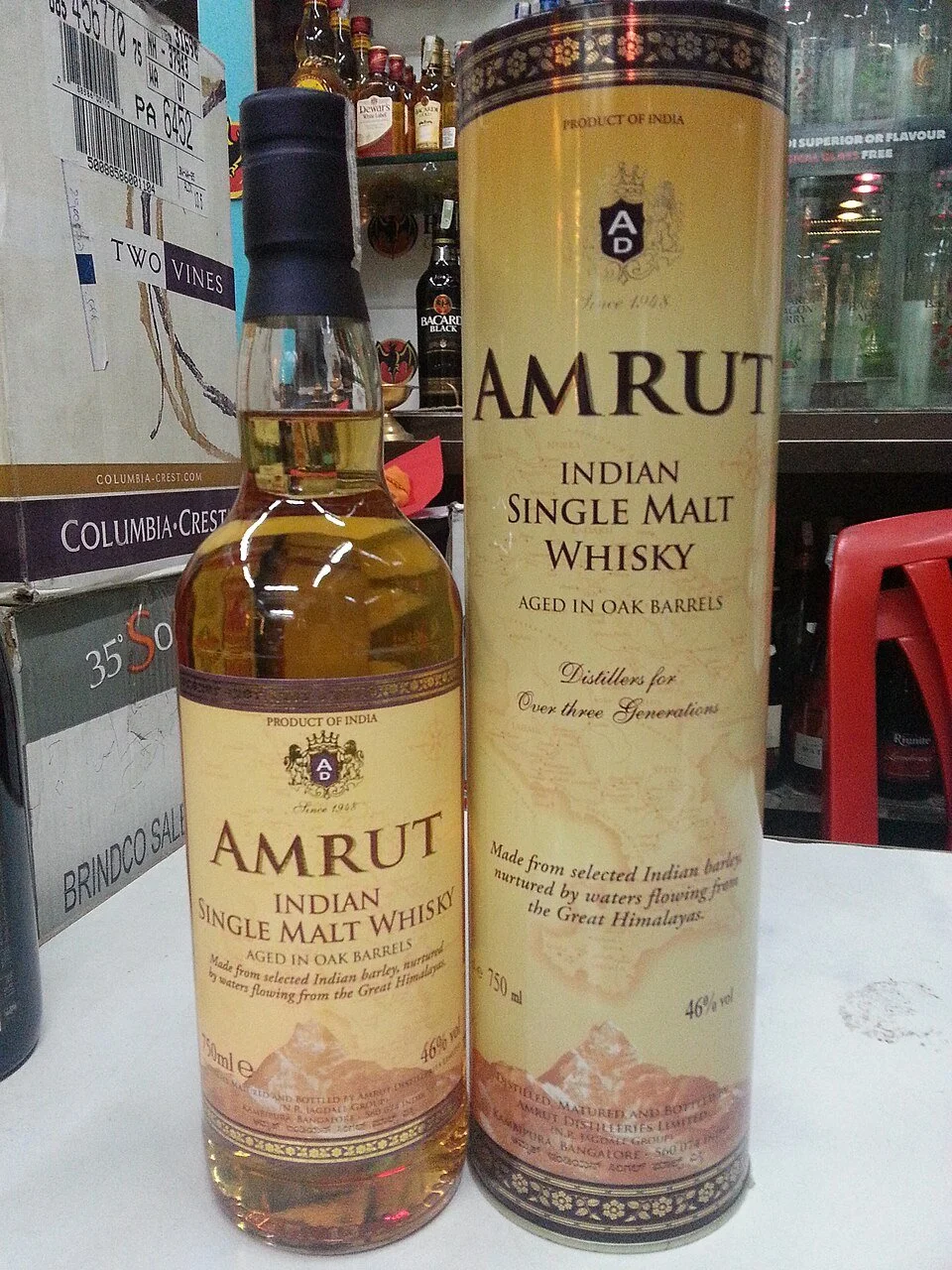
The standard Amrut Single Malt instantly announces itself with a nose bursting with malt, toasted barley, dried fruit and warm baking spices. There’s often a tropical edge too — mango, banana and citrus peels hovering in the background.
On the palate, it’s surprisingly bold. Rich oak, vanilla, dark sugar and spice roll across the tongue with an oily texture that gives the whisky real weight. The finish lingers beautifully with pepper, oak char and a soft sweetness.
This isn’t a timid whisky trying to imitate Speyside elegance. Amrut has swagger. It’s muscular, expressive and completely confident in its own identity.
And whisky fans noticed.
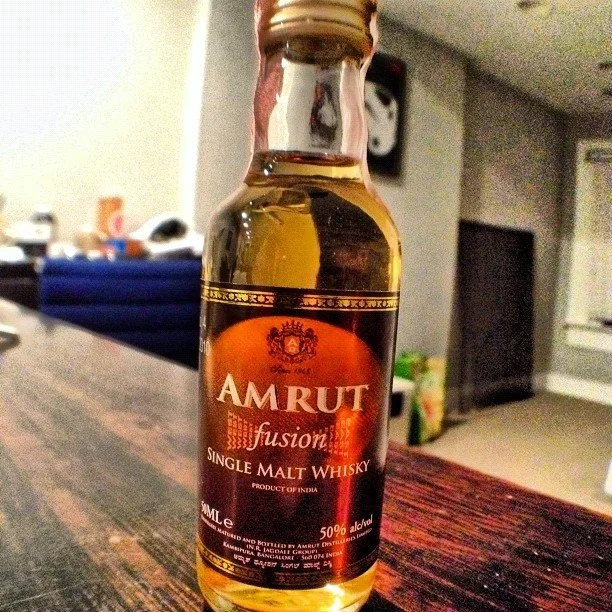
Jim Murray’s Whisky Bible famously propelled Amrut Fusion into the international spotlight when it ranked among the world’s best whiskies, helping establish Indian single malt as a serious category.
The Distillery That Put India on the Whisky Map
Today, Amrut stands at the forefront of India’s booming premium whisky movement. Alongside other rising Indian producers, the distillery has helped transform global perceptions of Indian whisky from mass-market blends into genuinely respected artisanal single malts.
Recent years have only strengthened the distillery’s reputation. Amrut has climbed international rankings, earned major awards, and continues to receive praise from whisky critics and enthusiasts alike.
Spend any time in online whisky communities and you’ll quickly see the same reaction repeated over and over: surprise, admiration, and then obsession. Whisky drinkers often arrive sceptical and leave completely converted.
Final Dram
There are whiskies that comfortably follow tradition, and then there are whiskies that redefine expectations entirely.
Amrut belongs firmly in the second category.
It’s bold, spicy, tropical, fiercely individual and impossible to mistake for anything else. More importantly, it represents one of the most exciting shifts in modern whisky culture: the rise of truly world-class single malt outside the traditional whisky heartlands.
If you still think great whisky can only come from Scotland, Amrut has a dram waiting to prove you wrong.