
Holladay Soft Red Wheat: Missouri’s Smooth Operator
There’s a certain pleasure in finding a bourbon that makes you stop and reconsider where American whiskey is being made. Kentucky may have the fame, Tennessee has the name recognition, but Missouri? Missouri has Holladay Distillery - and its Holladay Soft Red Wheat Bourbon is a very convincing argument for paying attention.
First, a small correction to the name in the brief: this isn’t a Tennessee whiskey. The bottle is Holladay Soft Red Wheat Bottled-in-Bond Missouri Straight Bourbon Whiskey, made at Holladay Distillery in Weston, Missouri. The distillery dates its origins to 1856, and its modern bourbon operation returned to the original site after a major renovation in 2015.
A Missouri bourbon with serious credentials
The first thing that makes Soft Red Wheat interesting is the recipe.
The mash bill is 73% corn, 15% wheat and 12% malted barley. That wheat takes the place of the rye found in Holladay's more traditional bourbon recipe, giving the whiskey a softer, rounder character.
And this isn't simply a young craft spirit trying to make an impression. The Bottled-in-Bond expression is six years old and 100 proof (50% ABV). It is produced, aged and bottled in Missouri, meeting both the federal Bottled-in-Bond requirements and Missouri's particularly demanding definition of "Real Missouri Bourbon."
That six-year age statement is particularly welcome. Holladay isn't asking you to take its word for the quality of its new-make spirit; it's giving the whiskey time to develop in oak.
The soft side of bourbon
So what does all that wheat actually bring to the glass?
Expect the classic bourbon building blocks — vanilla, caramel, sweet corn and oak — but with a fruitier, gentler edge. Independent tasting notes commonly pick out apple, pear, baking spice, vanilla and confectionery sweetness, while Food & Wine has highlighted the combination of soft vanilla-toffee oak and apple-fig fruit.
That makes the whiskey particularly appealing if you enjoy bourbons that favour roundness over aggression. At 100 proof there's enough muscle to keep things interesting, but the wheat helps prevent the profile from becoming dominated by the sharper spice you might expect from a rye-heavy bourbon.
It is, in other words, a bourbon that seems perfectly happy to take its time.
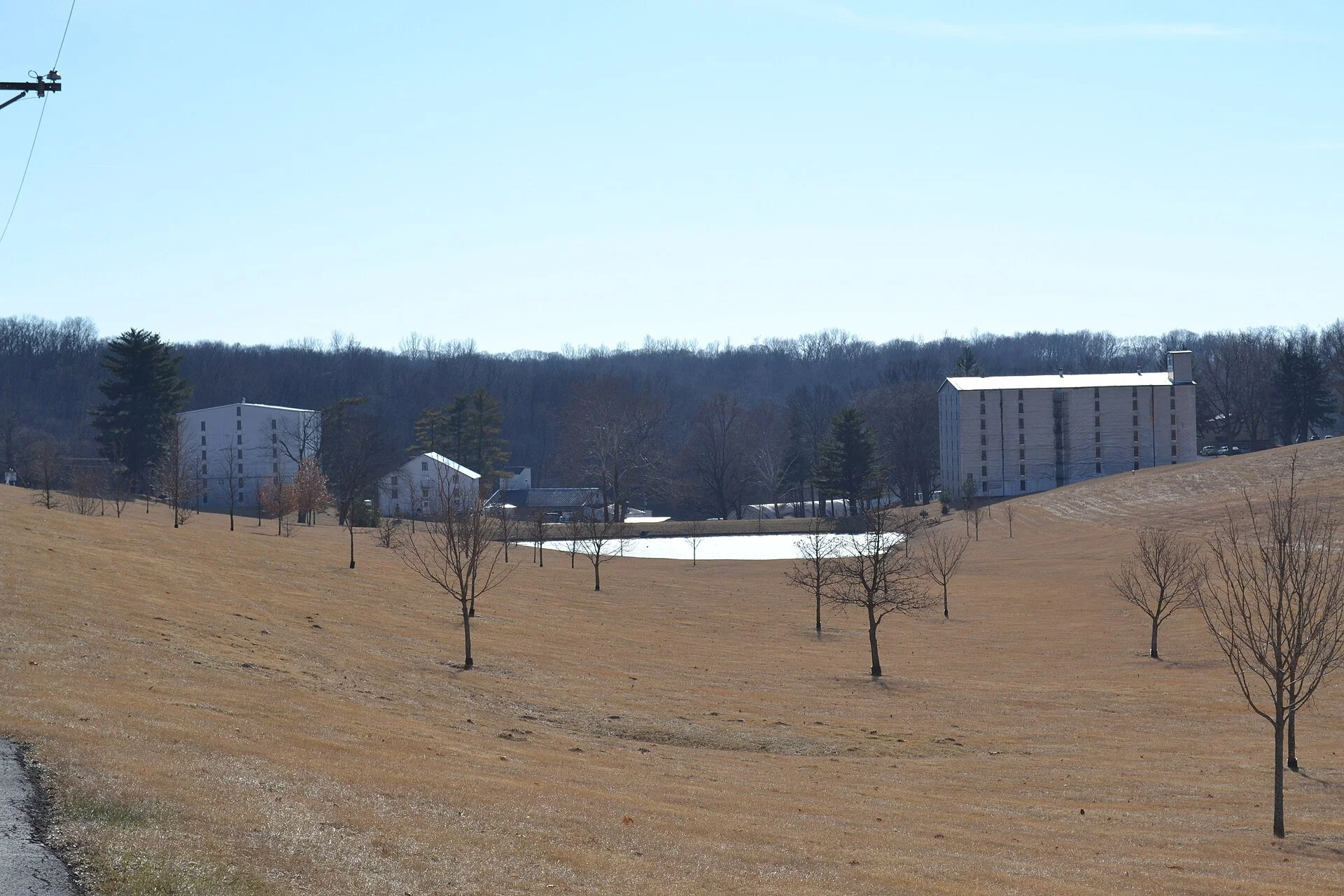
“McCormick Distillery, Weston, MO” by 25or6to4, licensed CC BY-SA 4.0.
A distillery with a fascinating second act
There's also a terrific story behind the bottle.
Holladay's roots stretch back to 1856, when the distillery was established in Weston. The property has limestone springs, a feature the distillery regards as an important part of its production story; those springs were documented by Lewis and Clark in 1804, decades before the Holladay distillery was founded.
Production eventually stopped, and the site spent years away from bourbon-making. Then came the 2015 renovation — a reported $10 million investment — which restored the original stillhouse and brought bourbon production back to the site. HHolladay Bourbon
That history gives Soft Red Wheat an appealing sense of place. This isn't bourbon merely wearing a Missouri address on its label. The whiskey is very deliberately tied to the Weston property and the distillery's revived grain-to-glass operation.
How I'd drink it
For a first pour, I'd keep it simple.
Neat, in a Glencairn or similar glass, with a few minutes to settle, lets the wheat-driven softness and oak influence emerge without dilution. If the 100-proof strength feels a little lively, a few drops of water should open the whiskey up nicely.
And don't overlook its cocktail potential. Holladay itself currently features its Soft Red Wheat Bottled-in-Bond in cocktails including the Gateway to the West and Show Me Smash, while Food & Wine has suggested it could make an excellent Manhattan component.
The verdict
Holladay Soft Red Wheat is exactly the sort of bourbon that makes the American whiskey landscape more exciting.
It's six years old, bottled at 100 proof, built around a 15% wheat component and produced at a historic Missouri distillery that has successfully returned to bourbon-making.
More importantly, it doesn't need the backstory to carry it. In the glass, the combination of vanilla, caramel, fruit, oak and gentle baking spice gives it plenty of personality. It's approachable without being boring, substantial without becoming overbearing, and distinctive enough to remind you that great bourbon doesn't have to come from the usual places.
Whisky-blog verdict: one for the curious bourbon drinker. Missouri has entered the conversation — and Holladay is making sure we listen.